Nilkitkwa Lake
British Columbia

Where is Nilkitkwa Lake?

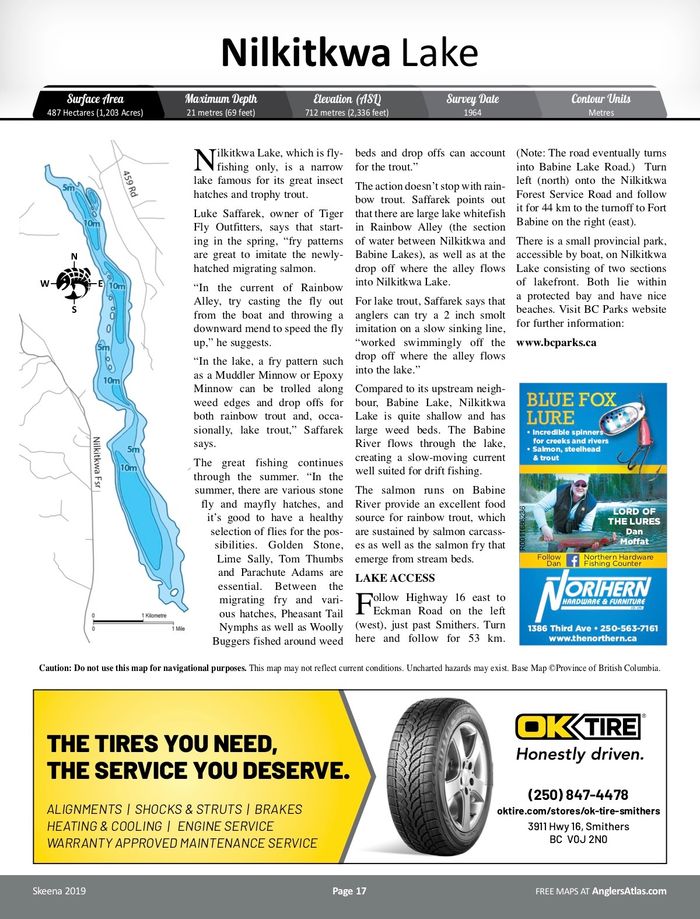
Nilkitkwa Lake (55.3735, -126.6558), located in Skeena Region, British Columbia, Canada spans 461.7 hectares (approximately 1141 acres or 4.6 square kilometers).

Which fish can I catch at Nilkitkwa Lake?

Not enough members have confirmed species for Nilkitkwa Lake, add the species you know are in Nilkitkwa Lake below. Please use your best judgement when determining where you can fish, and make sure you follow local rules and regulations.

What does Nilkitkwa Lake have?

No one has left markers on Nilkitkwa Lake yet, you can add markers on the map.

About Nilkitkwa Lake

Nilkitkwa Lake is a narrow lake famous for its great stonefly hatch and trophy trout. The stonefly hatch starts with the warmer weather and normally lasts until the end of July—sometimes into August. Try to cast a dry-fly pattern downstream and let it drift with the boat. Keep the line loose in order to make the fly look real. When fishing along the weed beds, try a Parachute Adams or Royal Wullf dry fly. A Sofa Pillow will also work well.

Compared to its upstream neighbour, Babine Lake, Nilkitkwa Lake is quite shallow and has large weed beds. The Babine River flows through the lake, creating a slow-moving current well suited for drift fishing. The salmon runs on Babine River provide an excellent food source for rainbow trout, which are sustained by salmon carcasses as well as the salmon fry that emerge from stream beds. Upstream of this lake is a short section of river known as “Rainbow Alley,” which boasts some of the best rainbow trout fishing in the province. The trout can grow larger than ten pounds. Please consult the B.C. Freshwater Fishing Regulations for restrictions in place.

Nilkitkwa Lake is designated as fly-fishing only, and there is a bait ban in effect (see regulations for exceptions). For more information about some great hand-tied flies for Nilkitkwa Lake, visit www.webflyz.com.

LAKE ACCESS

Follow Highway 16 east to Eckman Road on the left (west), just past Smithers. Turn here and follow for 53 km. (Note: The road eventually turns into Babine Lake Road.) Turn left (north) onto the Nilkitkwa Forest Service Road and follow it for 44 km to the turnoff to Fort Babine on the right (east). There is a small provincial park, accessible by boat, on Nilkitkwa Lake consisting of two sections of lakefront. Both lie within a protected bay and have nice beaches. Visit BC Parks website for further information: www.bcparks.ca.


Lodging and Camping

We don't have any information on lodging and camping for Nilkitkwa Lake.

User Feed

Type

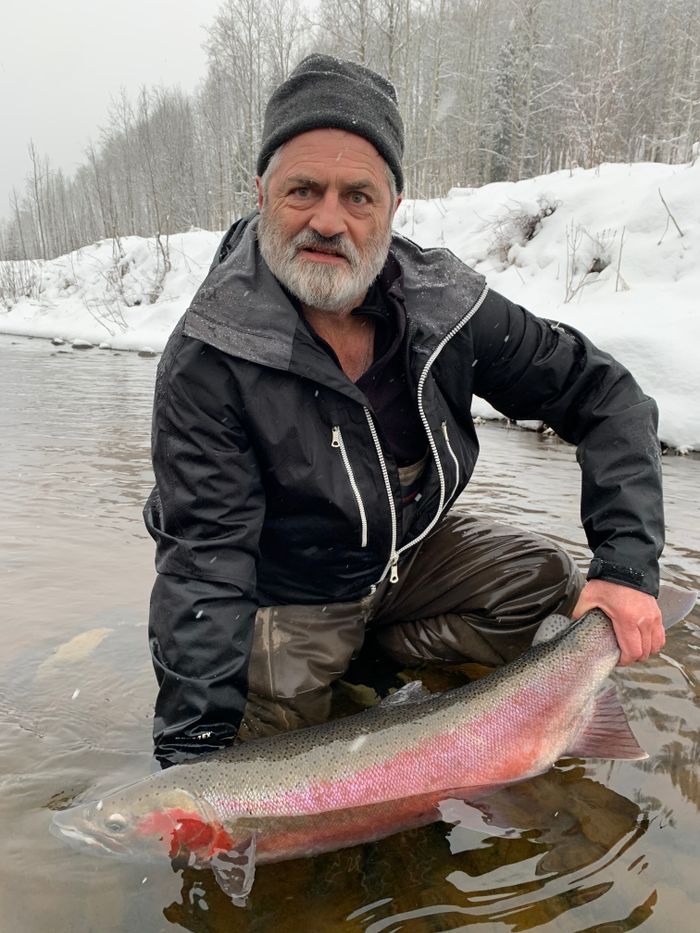
Because few people fish for steelhead in the winter, it is a good chance to be the only person at the ‘sweet spot’. We were on the Babine River, near Fort Babine BC, about 100 km from Smithers BC where we call home.

6 years ago

Nilkitkwa Lake, which is fly-fishing only, is a narrow lake famous for its great insect hatches and trophy trout. Luke Saffarek, owner of Tiger Fly Outfitters, says that starting in the spring, “fry patterns are great to imitate the newly-hatched migrating salmon. “In the current of Rainbow Alley, try casting the fly out from the boat and throwing a downward mend to speed the fly up,” he suggests. “In the lake, a fry pattern such as a Muddler Minnow or Epoxy Minnow can be trolled along weed edges and drop offs for both rainbow trout and, occasionally, lake trout,” Saffarek says. The great fishing continues through the summer. “In the summer, there are various stone fly and mayfly hatches, and it’s good to have a healthy selection of flies for the possibilities. Golden Stone, Lime Sally, Tom Thumbs and Parachute Adams are essential. Between the migrating fry and various hatches, Pheasant Tail Nymphs as well as Woolly Buggers fished around weed beds and drop offs can account for the trout.” The action doesn’t stop with rainbow trout. Saffarek points out that there are large lake whitefish in Rainbow Alley (the section of water between Nilkitkwa and Babine Lakes), as well as at the drop off where the alley flows into Nilkitkwa Lake. For lake trout, Saffarek says that anglers can try a 2 inch smolt imitation on a slow sinking line, “worked swimmingly off the drop off where the alley flows into the lake.” Compared to its upstream neighbour, Babine Lake, Nilkitkwa Lake is quite shallow and has large weed beds. The Babine River flows through the lake, creating a slow-moving current well suited for drift fishing. The salmon runs on Babine River provide an excellent food source for rainbow trout, which are sustained by salmon carcasses as well as the salmon fry that emerge from stream beds. LAKE ACCESS Follow Highway 16 east to Eckman Road on the left (west), just past Smithers. Turn here and follow for 53 km. (Note: The road eventually turns into Babine Lake Road.) Turn left (north) onto the Nilkitkwa Forest Service Road and follow it for 44 km to the turnoff to Fort Babine on the right (east). There is a small provincial park, accessible by boat, on Nilkitkwa Lake consisting of two sections of lakefront. Both lie within a protected bay and have nice beaches. Visit BC Parks website for further information: www.bcparks.ca

6 years ago
9 years ago

Fishing Fry for Rainbow Trout

Source: Frontier Farwest Lodge "Although the make up of Rainbow Alley is very unique to BC, small salmon based rivers in between lakes are very common to the north in Alaska. Kulik, Ugashik, Brooks, and Agulapak are all legendary rivers that have a similar make up to Rainbow Alley. Extremely short rivers that facilitate massive migrations of sockeye salmon, which in turn create an incomparable quantity of food sources for the trout that live there. Babine Lake is about 500 km upstream from the ocean and drains through Nilkitkwa Lake and Babine River into the Skeena River. Babine Lake is the rearing area for the second largest sockeye salmon population in British Columbia (although this run is predominantly man made). This man made sockeye run was created (enhanced) by the Babine Lake Development Project in the 60’s and consists of two spawning channels on Fulton River, one channel on Pinkut River and flow control on both rivers. Babine Lake has the largest sockeye stock in the Skeena River system, usually comprising more than 80% of the Skeena Run. Total spawners ranged from 60,000 to 910,000 before enhancement and 265,000 to 1,235,000 since the construction of the spawning channels at Pinkut and Fulton streams. This number is a bit skewed from the huge commercial fishery at the mouth of the Skeena River. This man made run is also very controversial as it has really changed the political landscape of the relationship between DFO, commercial fisheries, and sports fisherman. Steelhead bi catch while commercial fishing for sockeye are a hot button topic in the region. What this man made run has meant to the rainbows is an enormous supply of food right at there fingertips. Traditionally Rainbow Alley is a fishery that starts with the big sockeye fry migrations at the end of May. The rainbow trout that live in Babine Lake, and Nilkitkwa Lake ease into this small narrow section of river to feed heavily in the spring, and put on some much needed weight after a long winter. There is no specific date to hit this magical time but it can occur anytime from the ice melt off until the end of june. Most fry migrations from spawning areas to nursery lakes take place in the spring, when harsh winter conditions in lakes are moderating and the growing season is beginning. The time of smolt migration is correlated closely with latitude: migration is earlier in southern streams than in northern streams. Since 2012 was a bit of a late spring, the big fry migration seem to start in mid June, which is considered to be a couple weeks late.... If you are interested in fishing Rainbow Alley and learning more about the fry fishery contact us 1-877-846-9153, or contact Jim at the local fly shop Oscars Source for Adventure in Smithers 250-847-3377 [email protected] We look forward to seeing you on the water." Source: Frontier Farwest Lodge http://bulkleysteelhead.com/blog/fishing-fry-rainbow-trout

10 years ago