 Events
  Places
  Fish
Fish  Research
  Sign in
  New Catch Log
  New Trip Log
Science
Member since July 2021Recent Activity
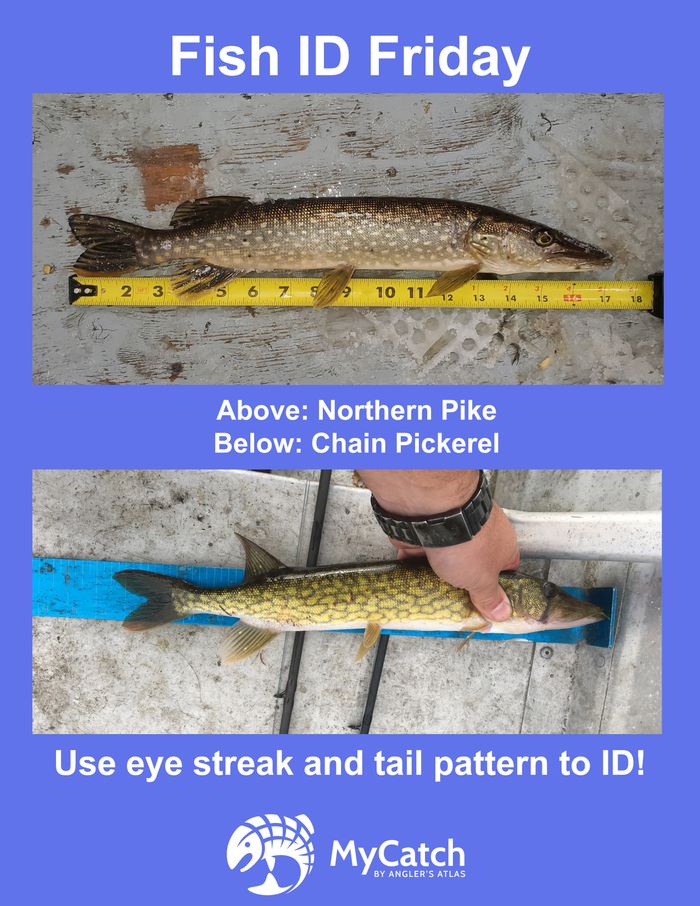
In this week’s #FishIDFriday post we are sharing how to ID Northern Pike VS Chain Pickerel!
You can tell Northern Pike from Chain Pickerel using two key features. While there are differences in the spot pattern between the two, patterns and colours vary greatly with individuals and are not the most reliable feature to use. Instead, look at the face of the fish. Does it have a black streak running down from the eye? If it does than it is a species of pickerel. Northern Pike do not have this eyestreak present (except for the fry/baby stage).
You can also use the pattern (or lack of) on the tail fin to distinguish between the two species. Northern Pike will have black striping on the tail fin while Chain Pickerel have no pattern.
Chain Pickerel are invasive in almost every location they are found in Canada! Have another fisheries question you would like to learn more about? Email it to [email protected]!
#MyCatchScience
5 years ago
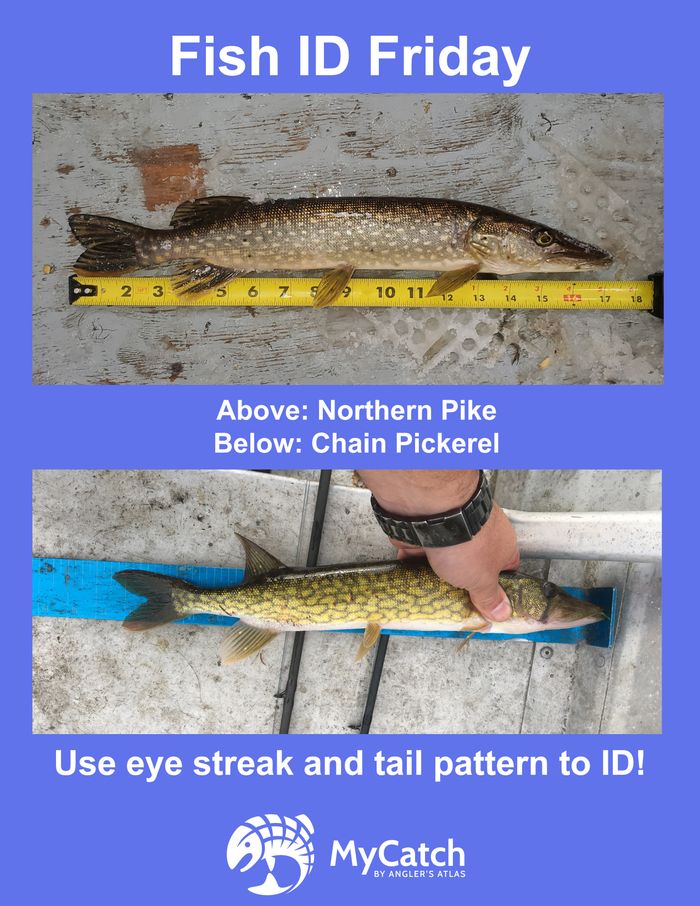
In this week’s #FishIDFriday post we are sharing how to ID Northern Pike VS Chain Pickerel!
You can tell Northern Pike from Chain Pickerel using two key features. While there are differences in the spot pattern between the two, patterns and colours vary greatly with individuals and are not the most reliable feature to use. Instead, look at the face of the fish. Does it have a black streak running down from the eye? If it does than it is a species of pickerel. Northern Pike do not have this eyestreak present (except for the fry/baby stage).
You can also use the pattern (or lack of) on the tail fin to distinguish between the two species. Northern Pike will have black striping on the tail fin while Chain Pickerel have no pattern.
Chain Pickerel are invasive in almost every location they are found in Canada! Have another fisheries question you would like to learn more about? Email it to [email protected]!
#MyCatchScience
5 years ago
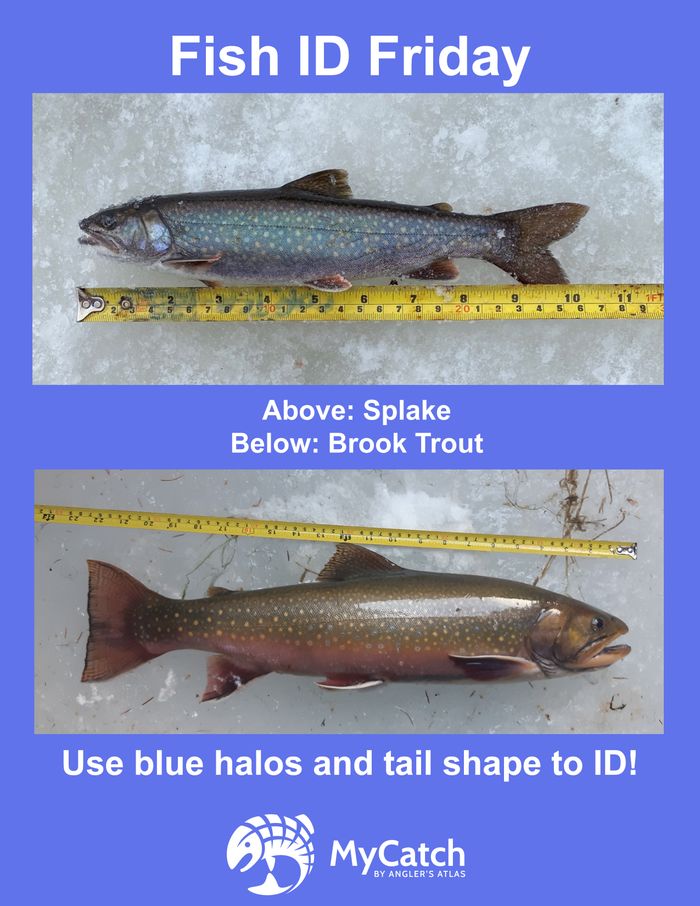
In this week’s #FishIDFriday post we are sharing how to ID Brook Trout VS Splake!
There are two key identifiers for ID between Splake and Brook Trout; the shape of the tail and the presence/absence of blue halos around the spots on the body. Splake can be similar in size and similar in colouring to Brook Trout so the tail shape is the first feature to look at. Splake (and small Lake Trout) have a forked tail while Brook Trout have a blunt or flat tail. This is the easiest feature for anglers to use.
In addition to tail shape you can also look at the coloured spots on the body of the trout below the lateral line. Brook Trout have yellow spots with no halos and red spots with a bright blue halo around them. Splake can have white, yellow, and even pink spots on the body but will not have any halos around the spots
Splake are actually a hybrid between a Lake Trout and a Brook Trout! Have another fisheries question you would like to learn more about? Email it to [email protected]!
#MyCatchScience
5 years ago
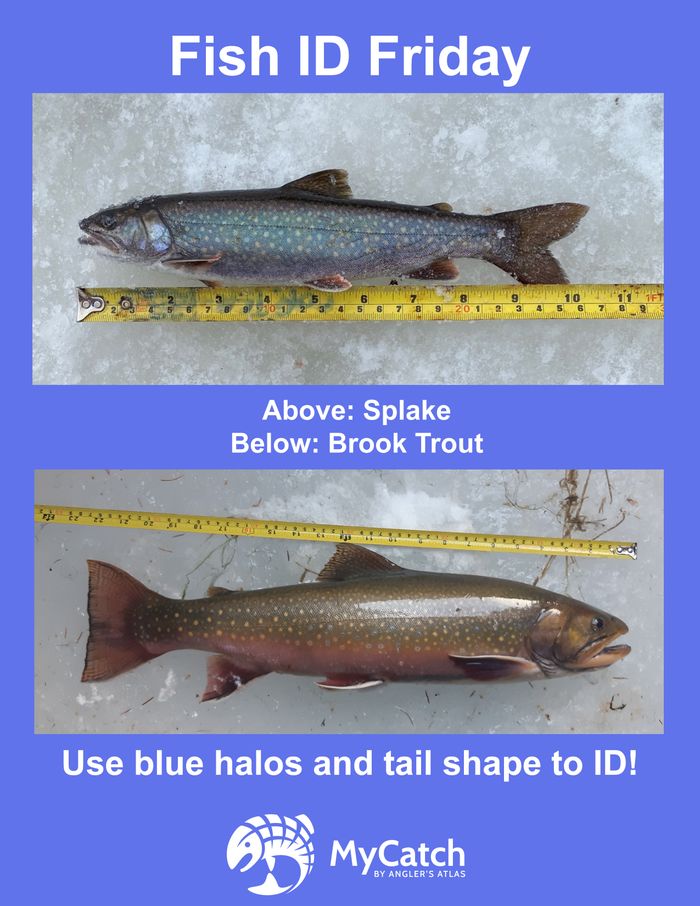
In this week’s #FishIDFriday post we are sharing how to ID Brook Trout VS Splake!
There are two key identifiers for ID between Splake and Brook Trout; the shape of the tail and the presence/absence of blue halos around the spots on the body. Splake can be similar in size and similar in colouring to Brook Trout so the tail shape is the first feature to look at. Splake (and small Lake Trout) have a forked tail while Brook Trout have a blunt or flat tail. This is the easiest feature for anglers to use.
In addition to tail shape you can also look at the coloured spots on the body of the trout below the lateral line. Brook Trout have yellow spots with no halos and red spots with a bright blue halo around them. Splake can have white, yellow, and even pink spots on the body but will not have any halos around the spots
Splake are actually a hybrid between a Lake Trout and a Brook Trout! Have another fisheries question you would like to learn more about? Email it to [email protected]!
#MyCatchScience
5 years ago
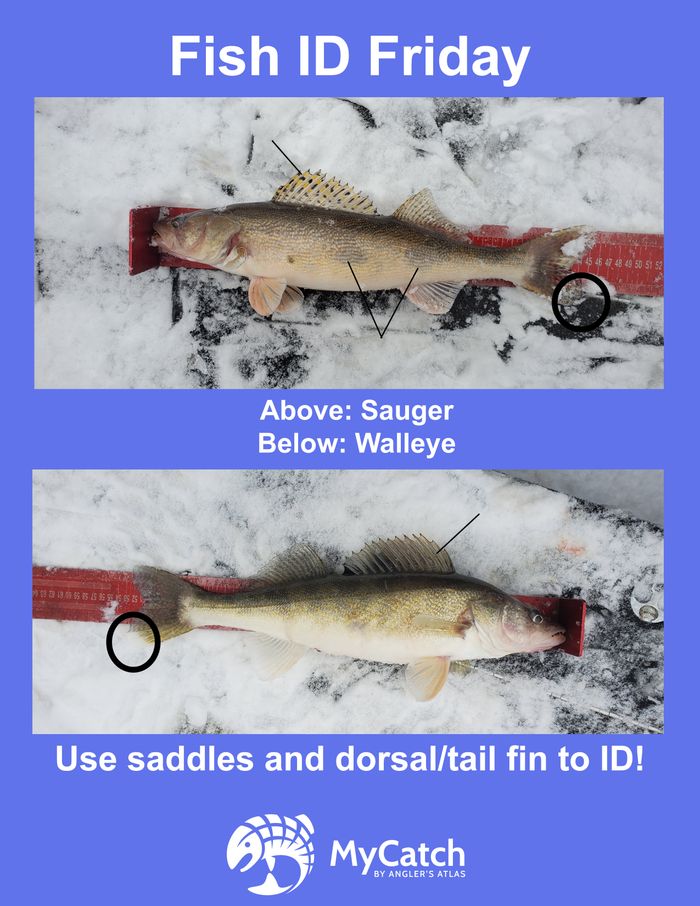
In this week’s #FishIDFriday post we are sharing how to ID Walleye, Sauger, and the hybrid between the two Saugeye!
There are three key identifiers for ID between Sauger and Walleye.
Due to individual variation sometime these features are not as distinct, especially in areas that hybrids exist. The first key feature is the pattern on the dorsal fin. Walleye will have no distinct spots on their dorsal fin while Sauger do. The second is the distinct dark saddles (or large dark spots) on the body. Some Walleye will have darker colouration above the lateral line but Saugers will have saddles and they appear above and below the lateral line. The final feature is the amount of white on the bottom of the tail (caudal) fin.
Walleye will have a square-like white patch on the tail fin while Sauger will have either no white at all or a thin white stripe along the bottom of the tail.
Identifying Saugeye (the hybrid between Sauger and Walleye) can be difficult to do visually. This is because all of the identification features for hybrids are intermediate. This means that hybrids have some of the features of walleye and some of sauger, and which features hybrids have very based on the individual.
Some feature combinations are easier to spot, like a Saugeye that has a spotted dorsal fin, no saddles, and a white tail spot. But these Saugeye are also able to BackCross with each species. That means a Saugeye can successfully spawn with normal Walleye or Sauger to create a second generation hybrid (F2) that genetically is 75% one species and 25% the other. These hybrids often have all the regular features of one species and can only accurately be detected by genetic analysis.
Hybrids have a lower spawning success rate than Walleye/Sauger - Let us know in the comments if you want a separate post on how hybrids can impact a fishery! Have another fisheries question you would like to learn more about? Email it to our science communications: [email protected]!
#MyCatchScience
5 years ago
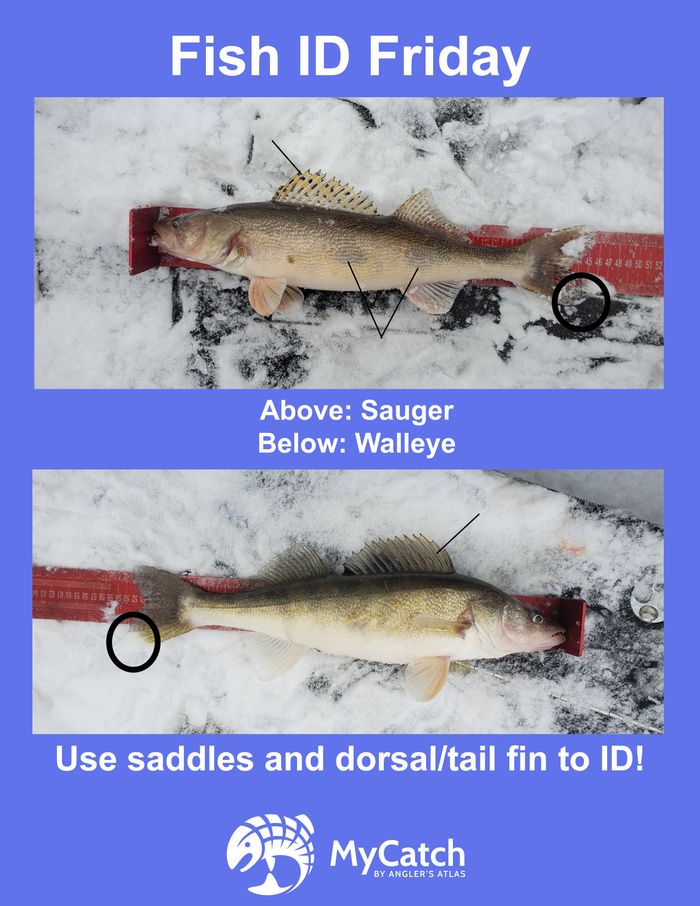
In this week’s #FishIDFriday post we are sharing how to ID Walleye, Sauger, and the hybrid between the two Saugeye!
There are three key identifiers for ID between Sauger and Walleye.
Due to individual variation sometime these features are not as distinct, especially in areas that hybrids exist. The first key feature is the pattern on the dorsal fin. Walleye will have no distinct spots on their dorsal fin while Sauger do. The second is the distinct dark saddles (or large dark spots) on the body. Some Walleye will have darker colouration above the lateral line but Saugers will have saddles and they appear above and below the lateral line. The final feature is the amount of white on the bottom of the tail (caudal) fin.
Walleye will have a square-like white patch on the tail fin while Sauger will have either no white at all or a thin white stripe along the bottom of the tail.
Identifying Saugeye (the hybrid between Sauger and Walleye) can be difficult to do visually. This is because all of the identification features for hybrids are intermediate. This means that hybrids have some of the features of walleye and some of sauger, and which features hybrids have very based on the individual.
Some feature combinations are easier to spot, like a Saugeye that has a spotted dorsal fin, no saddles, and a white tail spot. But these Saugeye are also able to BackCross with each species. That means a Saugeye can successfully spawn with normal Walleye or Sauger to create a second generation hybrid (F2) that genetically is 75% one species and 25% the other. These hybrids often have all the regular features of one species and can only accurately be detected by genetic analysis.
Hybrids have a lower spawning success rate than Walleye/Sauger - Let us know in the comments if you want a separate post on how hybrids can impact a fishery! Have another fisheries question you would like to learn more about? Email it to our science communications: [email protected]!
#MyCatchScience
5 years ago
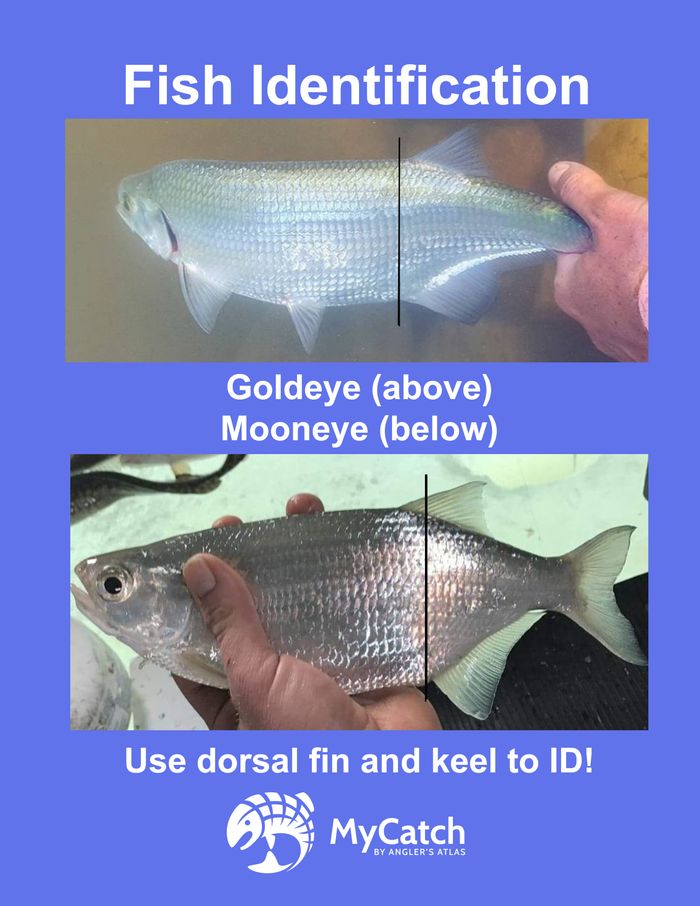
Goldeye and Mooneye are two species that are often caught by anglers. These species are very similar looking and are often incorrectly identified.
Here are some tips to help tell them apart!
Mooneye are MAD:
Mooneye Anterior(ahead) Dorsal
The easiest way to tell Mooneye from Goldeye is where the dorsal (top) fin starts! If you draw a straight line up from the vent of the fish to it’s back, a Mooneye’s dorsal fin will start before the vent and a Goldeye’s dorsal fin will start in line with or behind the vent (black lines).
Mooneye and Goldeye also have a bone structure called a keel which runs down the belly of the fish! This is another way to distinguish them. Goldeye have a full keel that runs from the pectoral (side) fins to the anal fin, while Mooneye have a half keel runs from the pelvic fin to the anal fin.
Have a fisheries question you would like to learn more about? Email it to our science communications: [email protected]!
5 years ago
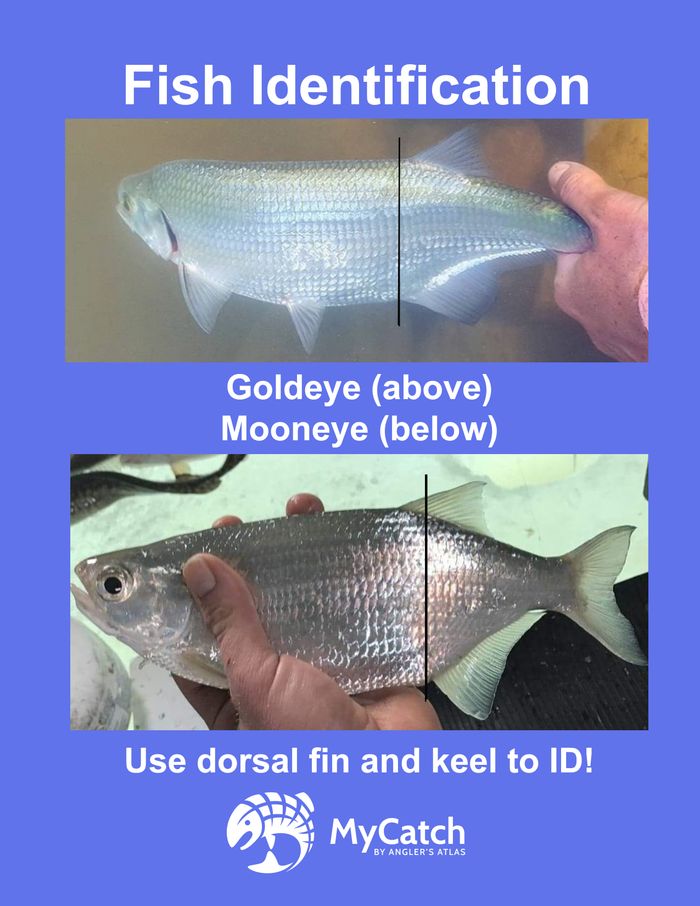
Goldeye and Mooneye are two species that are often caught by anglers. These species are very similar looking and are often incorrectly identified.
Here are some tips to help tell them apart!
Mooneye are MAD:
Mooneye Anterior(ahead) Dorsal
The easiest way to tell Mooneye from Goldeye is where the dorsal (top) fin starts! If you draw a straight line up from the vent of the fish to it’s back, a Mooneye’s dorsal fin will start before the vent and a Goldeye’s dorsal fin will start in line with or behind the vent (black lines).
Mooneye and Goldeye also have a bone structure called a keel which runs down the belly of the fish! This is another way to distinguish them. Goldeye have a full keel that runs from the pectoral (side) fins to the anal fin, while Mooneye have a half keel runs from the pelvic fin to the anal fin.
Have a fisheries question you would like to learn more about? Email it to our science communications: [email protected]!
5 years ago
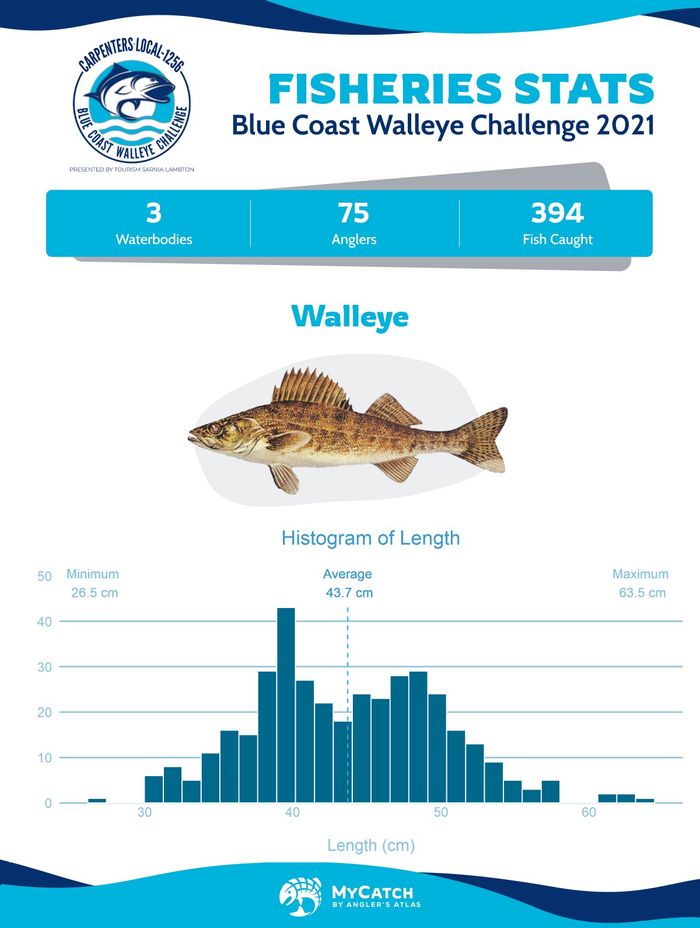
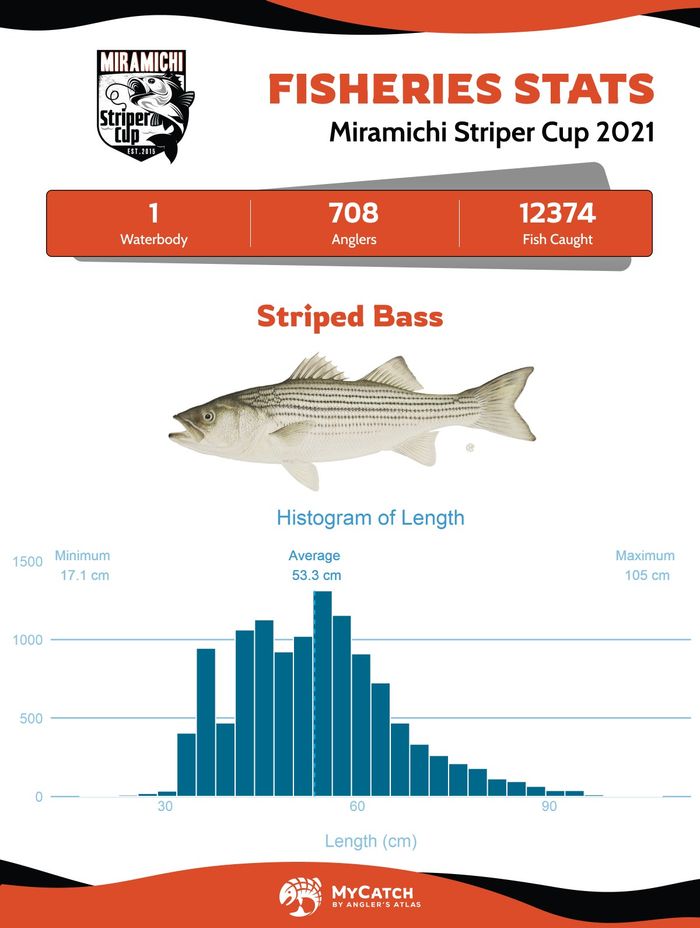
Tournament data summary from the 2021 Striper Cup Tournament. The histogram shows the lengths of Striped Bass entered in the tournament. #MyCatchScience
5 years ago
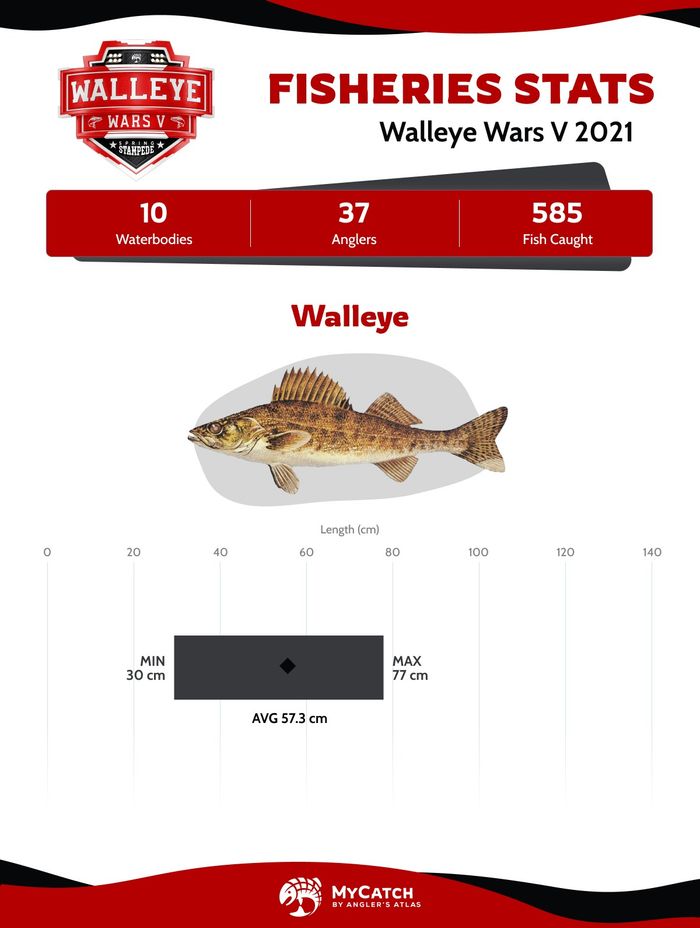
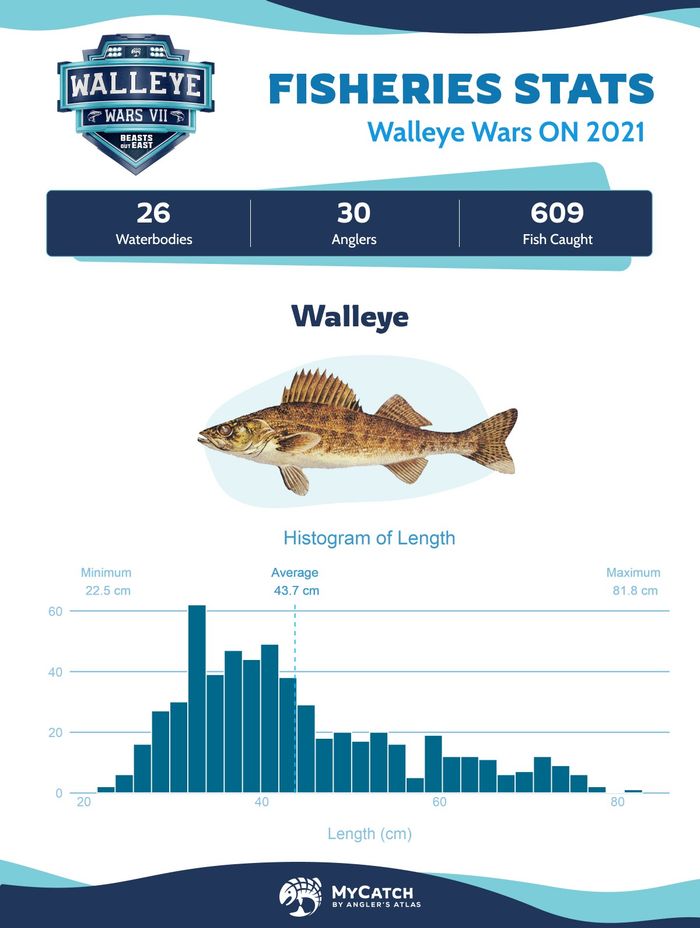
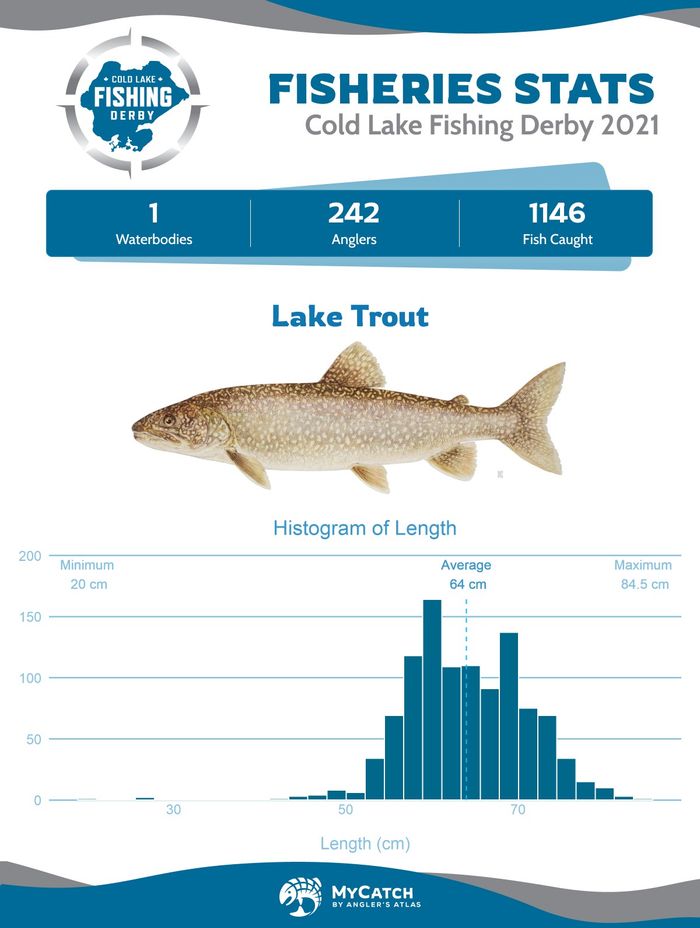
Tournament summary data from the 2021 Cold Lake Fishing Derby. The histogram shows the length distribution of Lake Trout entered in the tournament. #MyCatchScience
5 years ago