 Events
  Places
  Fish
Fish  Research
  Sign in
  New Catch Log
  New Trip Log
istewart
Member since September 2008Recent Activity
Green Lake, Nanaimo B.C.
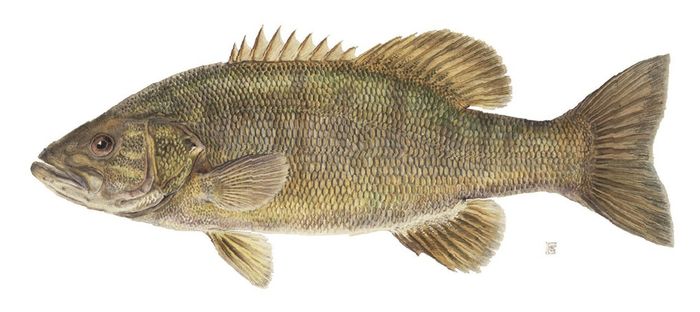
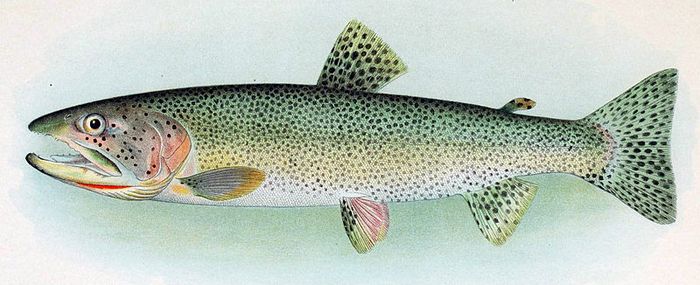
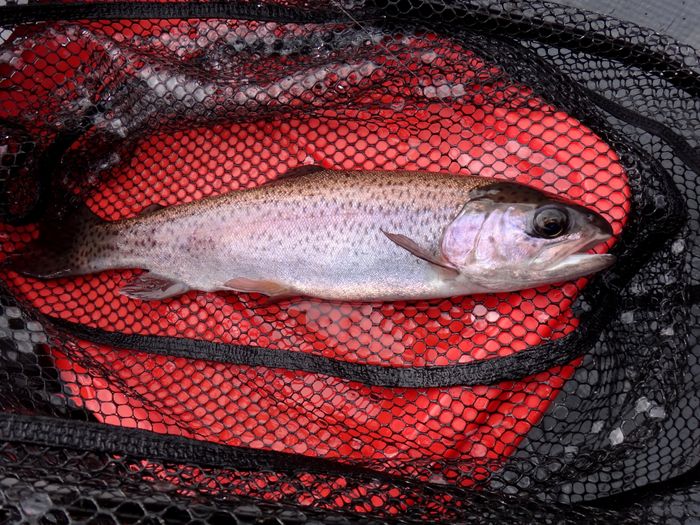
Green Lake is a small urban lake within Nanaimo, B.C. city limits. It is stocked regularly with catchable (9 to 12 inch) Fraser Valley stock rainbow trout. 500 to 1000 fish are put in the lake 3 or 4 times a year in the spring and fall. The fish which survive the fishing pressure can reach sizes up to 16 inches in a few years.
9 years ago
Winter fishing on the Island
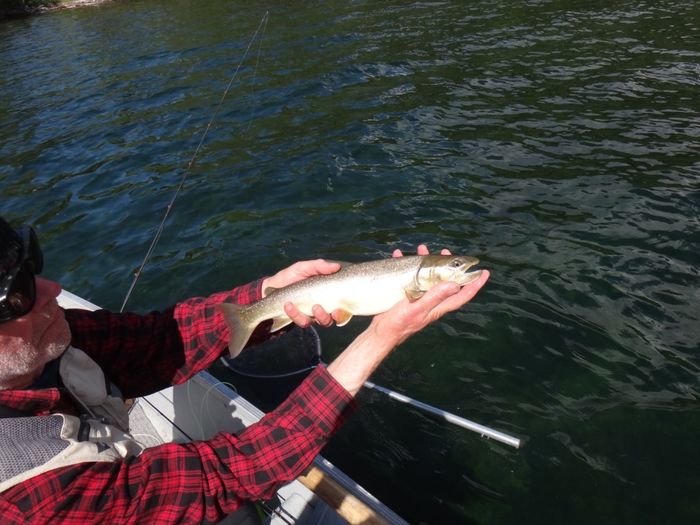
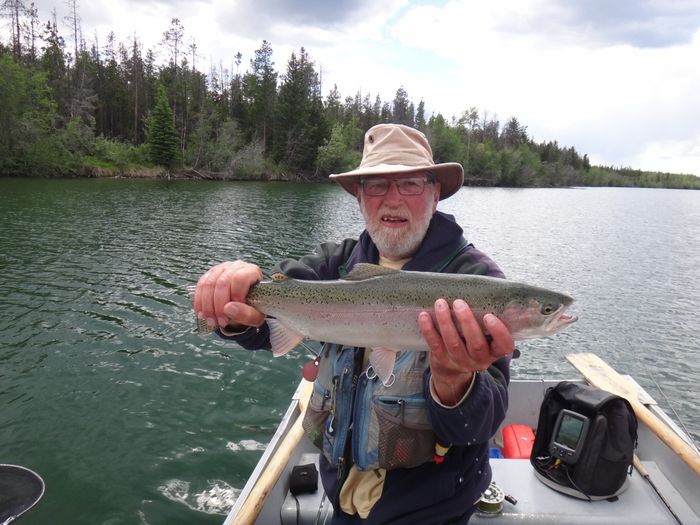
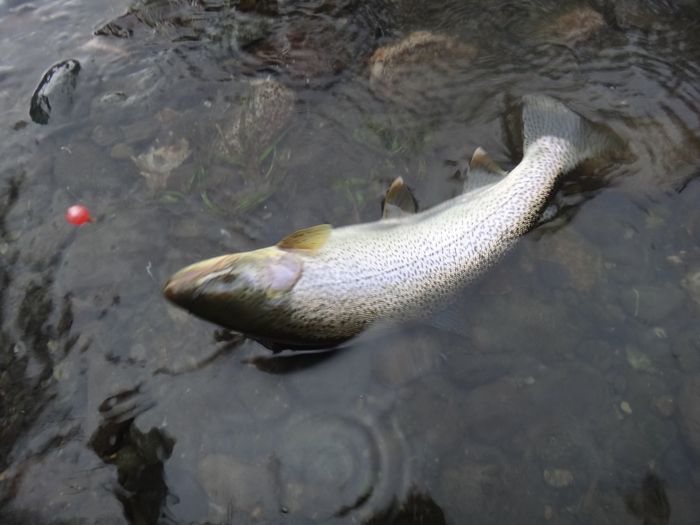
Fly fishermen on Vancouver Island have some options for winter fishing besides pursuing the elusive steelhead. With nymphing gear (long flyrod with heavily weighted flies) it is possible to target winter feeding trout in many different rivers on the East coast of the Island. The key is to watch the water levels in the river and the clarity of the water. Sudden rainstorms can "blow out" a river and make it unfishable. The Canadian Hydrographic Service has on line live feeds to gauges on most of the rivers. If you know the levels for "fishability" you can judge whether it is worthwhile to make a trip to the river. The Quinsam and the Cowichan are two rivers which are popular for this winter time sport. The Quinsam cutthroat was caught on a trout bead fished nymph style.
10 years ago
Fly fishing East Vancouver Island Rivers
Fly fishermen have been enjoying some beach fishing for coho and chum but the best fishing has been in the rivers which have been getting some periods with increased flow due to fall rains settling in. The Little and Big Qualicums, the Campbell, Quinsam and the Nanaimo have all seen good runs of chum coming in and lesser runs of coho. We hope that the recent "Pineapple Express" will dump enough rain into the systems to bring on some fresh fish.
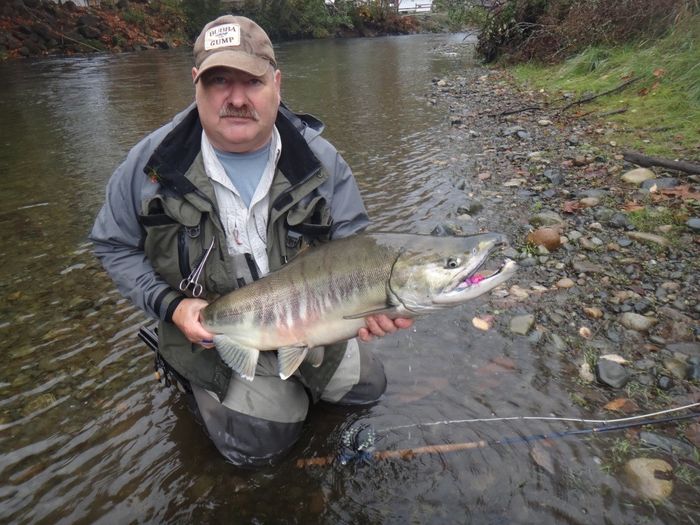
Chums have been biting on pink flies or chartreuse flies with orange bead heads (the chum version of the Pumpkinhead!)
In the accompanying photograph, Andrew Cathers holds up a mid teens chum caught on a pink fly in the Little Qualicum on October 17.
10 years ago
Johnston Strait Lingcod
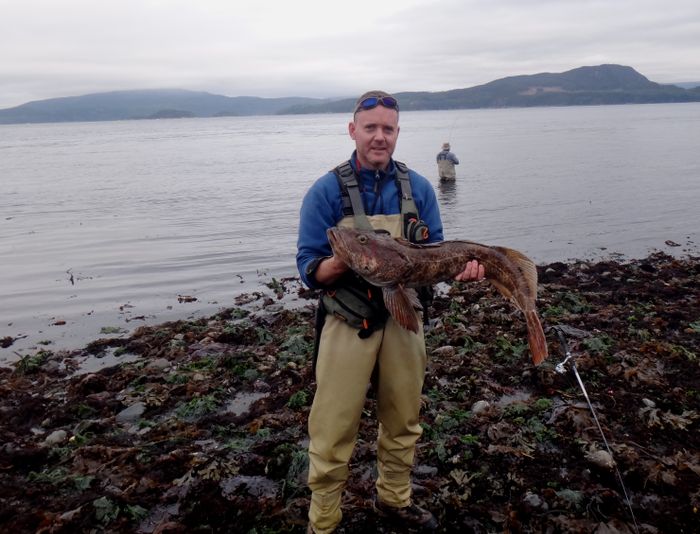
This 20 lb lingcod was caught by Shawn Stewart when it grabbed a small rockfish he was landing. The single hook from the rockfish caught in the lip of the big lingcod and allowed him to slide it up into the shallow water where I propelled it up onto the beach.
11 years ago
Warm water hamper Interior trout fishing.
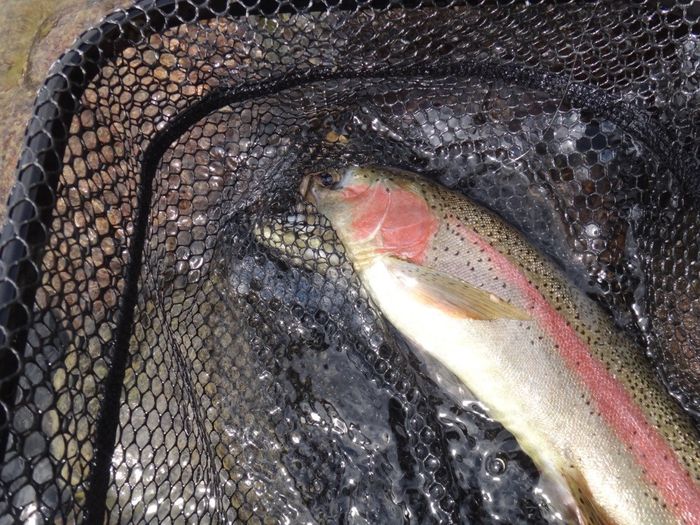
Fishing in Thompson River and surrounding lakes has slowed down as the summer got hotter and hotter. River temperatures in the warmer South Thompson have approached record highs of 19 to 20 degrees Celsius--warm enough to be fatal for trout that are played then released. The main Thompson below Kamloops Lake has been holding at around 16 degrees so is not in the same pickle.
A trip up to Savona in the first week in August produced a few nice rainbows up to 18 inches, but the usual insect hatches one would expect were definitely not very abundant when we were there. We caught most of the fish using larger, bulky dry flies which I imagine were taken as grasshopper imitations by the trout.
11 years ago
Beach fishing for salmon on Vancouver Island
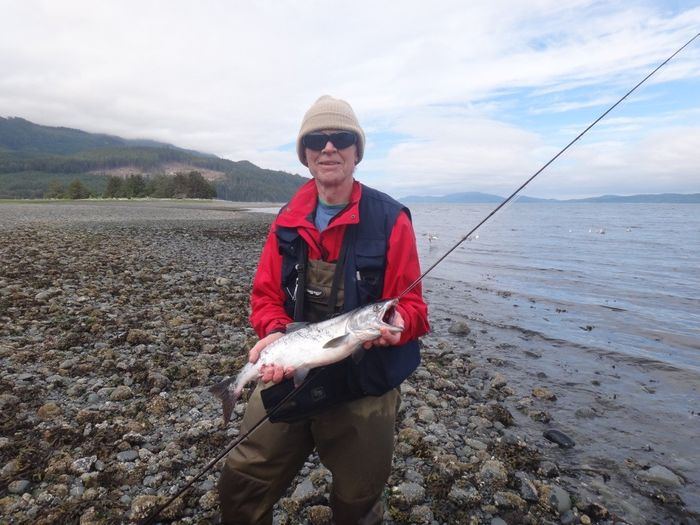
Beach fishing has been consistenly good on the east coast of the Island since late july. It started with pinks showing up in northern waters and spread down to where these feisty little salmon (average 3 to 4 pounds) can be found all the way from Port Hardy down to Victoria.
Cooler weather has brought some precipitation our way in the latter part of August and in September so far. We are hopeful that the increased fresh water in the rivers will make them safer for returning salmon and will cause salmon that are holding in the gulf to move closer to shore.
A few coho are being caught, especially in northern waters but the largest part of the run has not come in close enough for beach fishers to reach.
11 years ago
Cranbrook Silver
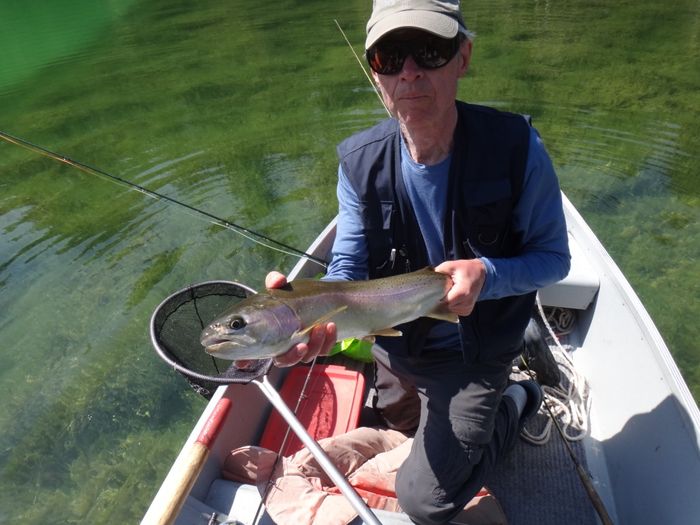
The indicator twitched ever so slightly sideways, so I lifted until I felt pressure . . . and a sharp pull set the hook in the as yet unseen trout. At that moment, my rod doubled over as a heavy fish started moving away from the boat. A flurry of head shakes confirmed that my microleech had been engulfed by a large silver bright rainbow, which rocketed to the surface and leaped in a glorious curve of heart stopping power. On hitting the water, the chrome beauty headed for Cranbrook 50 miles away and didn’t stop until 90 feet of line and an equal amount of backing had stripped from the overheated reel. He finished his run with a spectacular leap, hit the water and the line went slack. I began retrieving the “empty” line when Wayne shouted “your indicator isn’t showing—your fish is still on!”
I finally caught up with the fish after he had run past the boat and jumped again. It was a battle of wills to keep him from wrapping around the anchor ropes and he kept me busy for 5 more minutes with short, powerful runs and head shaking rolls. As Wayne slid the net under the 20 inch exhausted fish, the previous 2 hours of slow fishing were gone from my memory!
I had touched down 5 days earlier at the airport for my spring fishing trip to Cranbrook to join elder brother Wayne in what has become an annual pilgrimage. We made our base camp at Premier Lake provincial park and fished Premier, Quartz, Alsis and Grundy over the next 6 days. We worked hard for our fish, using every technique in our fishing arsenal from indicator fishing with chironomids, micro leeches and balanced leeches to “naked” fishing with long leaders and chironomids and various nymph imitations to fishing fast sink lines with dragon nymphs, leeches, wooly buggers and boobies.
We did not have spectacular fishing in terms of numbers but we never got skunked, with many fish in the above 18 inch size range and we were treated to 7 days of spectacular weather , beautiful scenery and beautiful clear water fish (rainbows and a few brook trout).
It is always difficult to leave that gorgeous country but I know I will be welcome again next year to join Wayne in our pursuit of the wily trout of the East Kootenay!
11 years ago
Island lakes fishing well
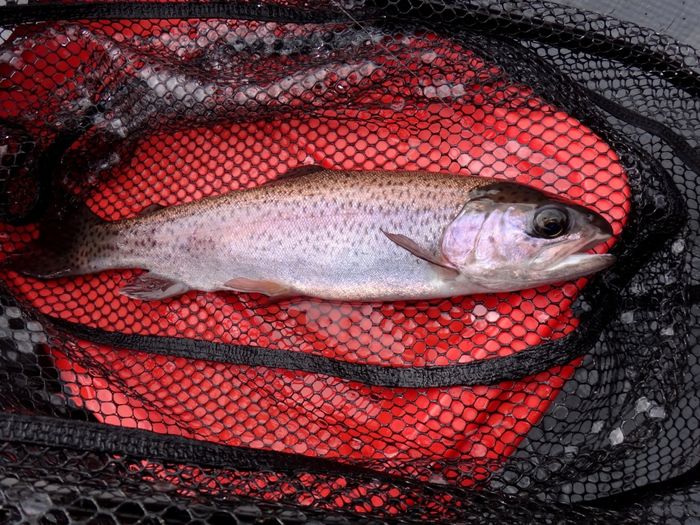
Vancouver Island low altitude lakes are producing good spring fly fishing as the spring weather allows fly fishers to get out on the waters in comfort. In the Nanaimno area, Green, Diver, Long, Colliery Dam lakes are producing fish on chironomids and a variety of other flies. Some of the fish are the newly released catchables but there are significant numbers of fish carrying over from the fall release of hatchery fish. Fish up to 15 inches are being caught frequently.
11 years ago
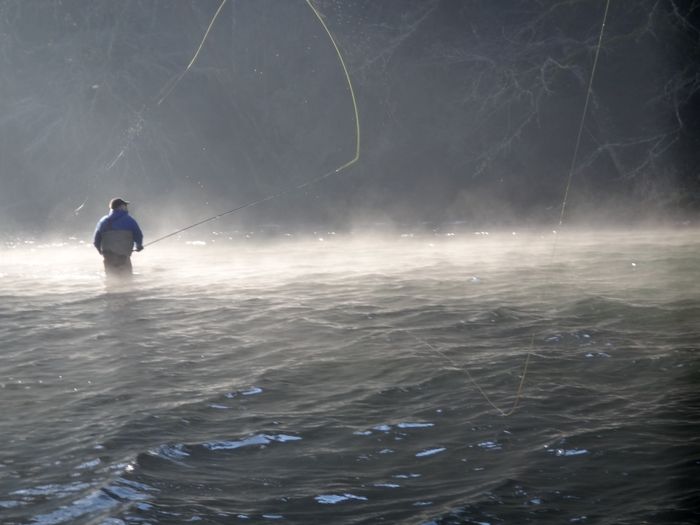
In the morning mist on the Cowichan
Spey fisherman tries his luck on the Cowichan River seeking an elusive fresh run steelhead.
11 years ago
What to do in the winter
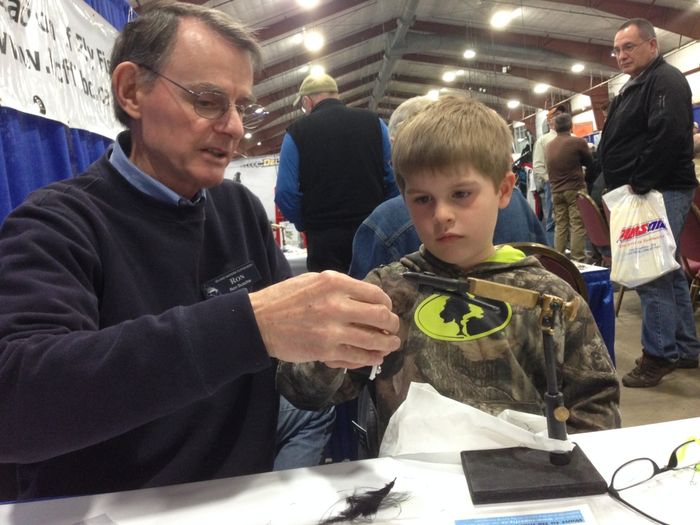
The Island Waters Fly Fishers have been finding things to do while they wait impatiently for the lakes to warm up for Spring fishing. 8 IWFF members tied on Saturday, Feb 28 at Cabela's in Nanaimo. Donuts were provided by Cabela's for customers and the fly tiers (I think the tiers ate more than the customers!). This event was the first of what we hope will be many done in cooperation with Cabela's. Customers were very curious about the whole process and art of fly tying. This provides a venue for educating fishers about the sport of fly fishing as well as advertising what we offer as a club.
6 members headed over to Tradex in Abbotsford, B.C. to tie flies at the annual 3 day Sports Show on March 6. The focus of the tying there was to get young people to try their hand at tying some of the simpler flies (like the Wooly Bugger) and to take their finished product with them to try out on the water! The photo shows Ron Busche with a curious youngster learning the finer points of a Wooly Bugger
11 years ago
Coho, chum abound in rivers
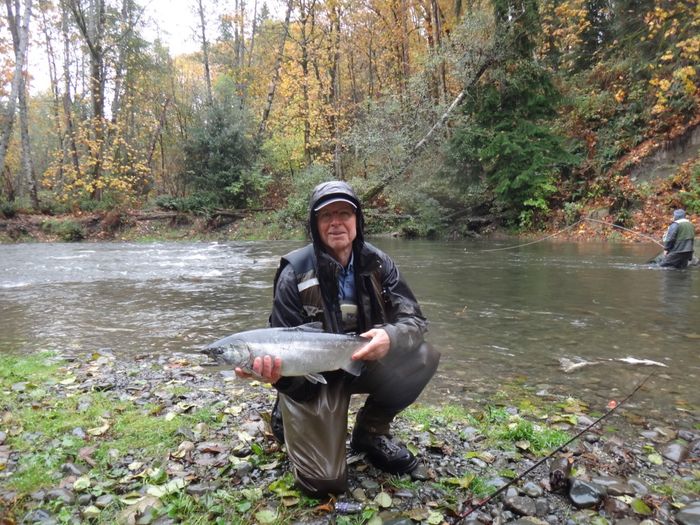
Ian Stewart, Angler's Atlas field staff volunteer on the Island, reports on the Little Qualicum:
The heavy rains of the last few weeks have raised river levels all over the Island but have also enticed good numbers of salmon up the rivers. Chinook runs that started in September are pretty well finished by now with most of the fish spawned out. Coho and chum are coming into many rivers in good numbers with good opportunities. Little Qualicum River is one of a few rivers that have a fly-fishing-only designation in the fall (despite misinformation being put out there by some local tackle stores!) The river has been steady fishing for chinooks early on and coho and chum right now.
If rivers return to fishable levels over the next week, fly fishers should have a few more opportunities to get out and sample the local waters.
11 years ago
Trout make up for sockeye snub
Ian Stewart, Angler's Atlas field staff, sends this report on sockeye fly fishing:
"Just returned from a trip to Savona near Kamloops at the mouth of Kamloops Lake where the Thompson starts on its way to the Fraser. I took some time off from doing chores for my stepmom to join my older brothers on a quest to catch the sockeye on a fly. There were lots of sockeye being caught, but the crowds were too thick for our liking so we explored some other places where there were fewer people. The two popular spots were near the Juniper Beach Provincial Park and just below the highway bridge at Savona.
"Everybody claims the sockeye will not bite and must be 'flossed' (snagged in the mouth). We were not able to prove them wrong and could not get the fish to bite at all on the various flies we presented to them.
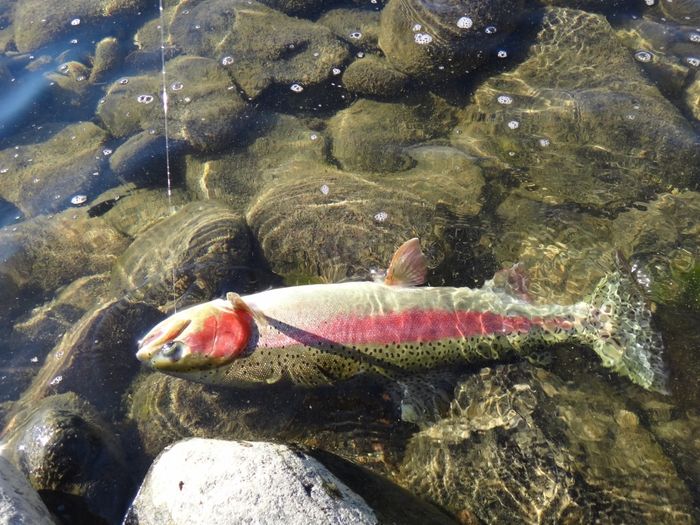
"I gave up on the last day and tried the trout fishing instead. I was pleasantly surprised to catch good numbers of trout up to 18 inches on a green Elk Hair caddis as well as on a Black Stone fly nymph. A poor showing on the salmon turned into a great time with the trout!"
In photo: An 18-inch Thompson River trout almost back to full health."
12 years ago
Fly casting for pinks spectacular
A report on river pink fishing on the North Island from Ian Stewart, Angler's Atlas field staff volunteer:
I just got back from a two-week trip north of Nanaimo, where I was able to fish the Campbell, Eve, Cluxewe and Keogh. The fishing for pink salmon on the fly was nothing short of spectacular. All of the rivers had above normal runs of pinks heading to their shores with numbers in the hundreds of thousands not being uncommon.
My brother and I developed "salmon elbow" from catching and releasing so many fish. We were catching fish in such numbers that we spent a lot of our time trying out new methods for catching these feisty silver fighters! The most interesting was using a high-speed retrieve (called the "roly-poly" by fly fishers.) In certain cases, the fish would follow, in small groups or alone, with their dorsal fin creating a wake on the surface. When the fly was stopped, you had from one to five seconds to wait before a savage strike rewarded your patience.
With the pink salmon run starting to slow down as the fish darken up and get ready for the fall spawning, fly fishermen are getting their heavier gear out and planning methods and locations to fish for the fall coho and chum runs. If the next runs follow the same pattern as the pink, then local fly fishermen can look forward to a banner year!
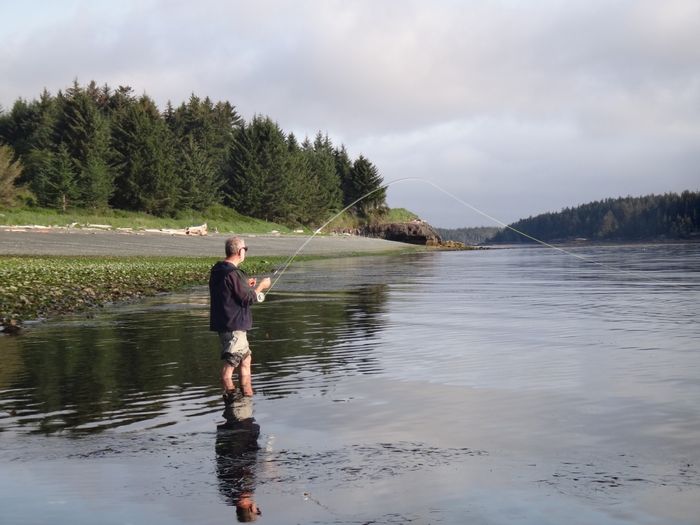
In photo: Wet-wading on a warm day. The fish were close in at the beach north of the Keogh River.
12 years ago
Pink shore fishing arrives
Ian Stewart, Angler's Atlas field volunteer, sends this report on a fly fishery often overlooked:
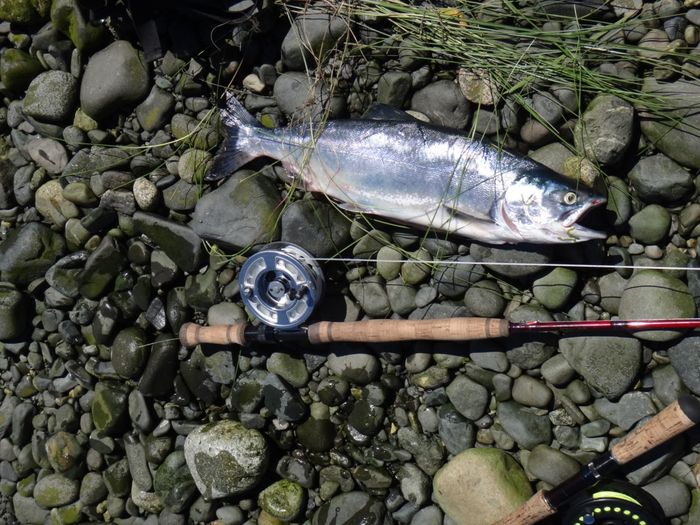
Vancouver Island fly fishers are eagerly awaiting the return of pink salmon to the east coast of the island. This year will be a big year for many of the rivers on the island. Pink salmon return to spawn after only two years in saltwater and spend a few months close to shore waiting for the rivers to get the late summer rains. This means that they can be fished from shore with fly fishing gear for several months each summer. Even years produce the largest runs usually, and if the runs from 2012 are any indication, we should expect large runs in 2014.
The first fish have been spotted near some north Island rivers, so it shouldn't be too long before they show up near the mouths of the rivers which support pink runs, including the Keogh, Cluxewe, Eve, Campbell, Oyster, Black Creek, Nile Creek and Nanaimo.
Fly fishers use medium-weight rods and floating or sink-tip lines to catch these silver scrappers, depending on the depth of the fish and water flow rates. At least 6 weight rods are recommended with lots of backing on the reel because the larger fish (they can be up to 6 or 7 pounds) can make runs of over 100 feet!
Favourite flies to use are tied on #4 to #8 hooks with or without bead heads. Preferred colours are various shades of pink, chartreuse, green and blue in different combinations. Fluorescent colours seem to work best. Checking local web sites will produce a plethora of patterns to try.
12 years ago
Another Island gem
Lower-altitude lakes in the Nanaimo-Cowichan lake area are moving into warmer weather conditions, so the best fishing is morning and evening, writes Ian Stewart, an Angler's Atlas field volunteer on the Island.
"Ant hatches are always exciting for fly fishermen to encounter so they should have a few ant imitations in the fly box in case they are lucky enough to run into one of these trout glutton fests!
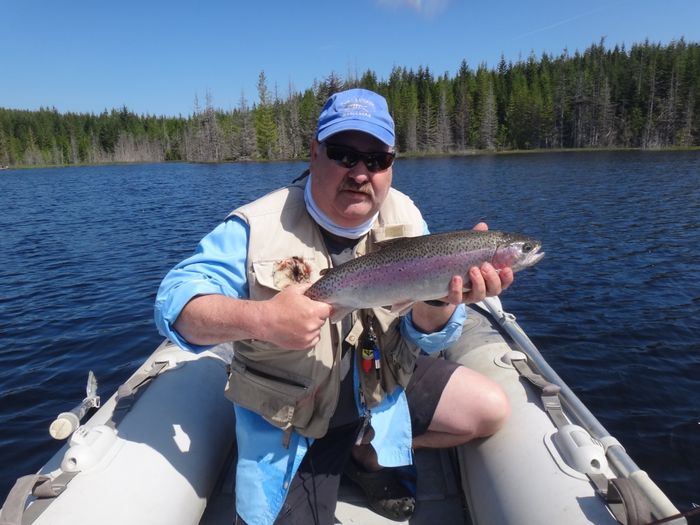
"The higher altitude lakes are fishing well now with dragonfly and damselfly nymphs working well. Some fishermen are also doing well with chironomids. The attached pictures are from a lake near Duncan (about half way between Nanaimo and Victoria).
Andrew and I found out how to get into Lois Lake, a shallow (18 ft. max.) higher altitude (about 2,000 ft.) lake near Duncan, with the help of Gerry Stevens. Andrew whaled on the trout, catching 4 with the biggest being 19, 20 and 22 inches! I had to be content with breaking off one large fish and landing a 13 incher. What gorgeous fish considering these are triploids. They are much more colourful than the Interior triploids. We will certainly go back again.
"Unfortunately (I guess) the lake is only accessible on the weekends (but I guess that reduces pressure on the lake along with an artificial fly only and one-fish limit). Surprisingly, Gerry, whom I consider to be one of the best lake fishermen in the club, ended up skunked for the day, but I think he was being stubborn and trying to use dry flies (which should have worked because the fish were taking an occasional damsel off the surface.) Andrew caught all his on a small sparse dragonfly nymph, which looked a lot like a damsel."
12 years ago
Lake bears early-season action
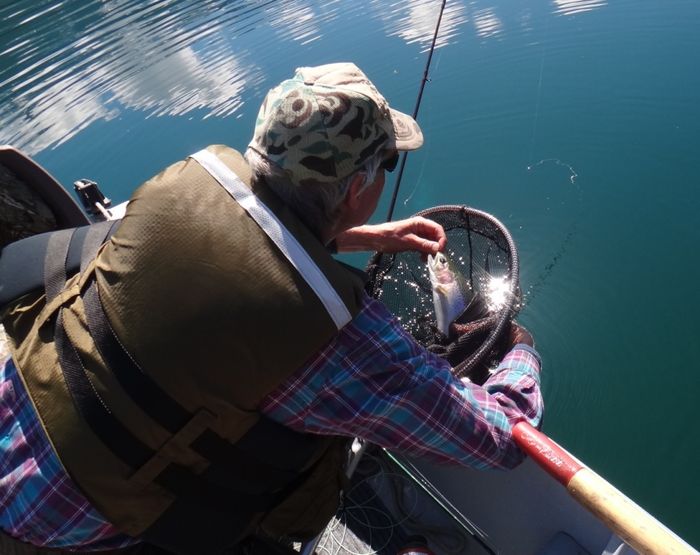
Ian Stewart, one of our field staff volunteers, returned from a trip to the Cranbrook area, where he managed to fish five lakes over a 12-day period. The most consistent fishing was on Premier Lake, one of the larger lakes in the area. In the end of April and beginning of May, this lake has developed a reputation for some good early-season action on rainbow and brook trout. Most of the fish are taken using small flies that imitate the abundant chironomids, which are hatching at this time. The flies are fished static on very long leaders (20 to 25 feet), either on a small float (called a strike indicator by fly fishermen) or on the leader alone with a very slow retrieve.
The fishing was good for two of three days on nearby Quartz Lake, a smaller lake with fish averaging much larger in size but not as numerous.
We also fished Solar, Larchwood and Echo lakes, which are all within an hour's drive of Cranbrook with some limited success (except at Solar, where we were skunked!)
12 years ago
Cowichan River winter brown trout
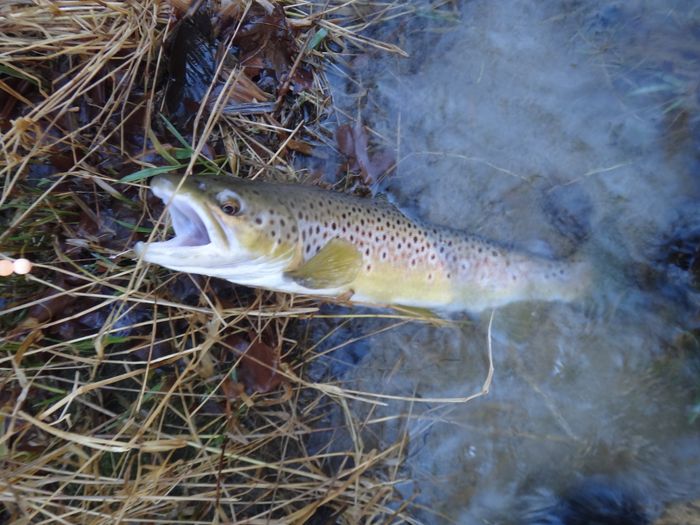
18 inch brown trout taken on Jan 25, 2014 on Cowichan R. B.C.
12 years ago